A few more images of the comet dropping right between the summits of Mt. Meeker and Long's Peak on 14 Mar 2013.

A few more images of the comet dropping right between the summits of Mt. Meeker and Long's Peak on 14 Mar 2013.

Not really ideal viewing conditions, with some clouds, and the comet still following the sun so closely at sundown, but still not a bad view of comet C/2011 L4 PanSTARRS.

Comet C/2011 L4 Pan-STARRS on the western horizon at 8:00 PM MDT, from the vicinity of Lyons, Colorado.
Comet names are constructed according to a convention of the International Astronomical Union:
A prefix, alluding to the type of comet, that can be any of the following:
This comet's name tells us that it is a non-periodic comet that was the fourth comet discovered in the second half of July 2011 by the Panoramic Survey Telescope & Rapid Response System - "Pan-STARRS" - a facility for wide-field imaging of the sky developed at the University of Hawaii's Institute for Astronomy.
C/2011 L4 Pan-STARRS is supposed to be visible through April 2013, and should become more easy to spot as it moves away from the sun from our point of view in the Northern Hemisphere. It will disappear from our view by 1 May.
It began snowing in the eastern foothills of the Rockies in the wee hours of Saturday, and continued steadily until late afternoon, when the sky began to clear over the Continental Divide:
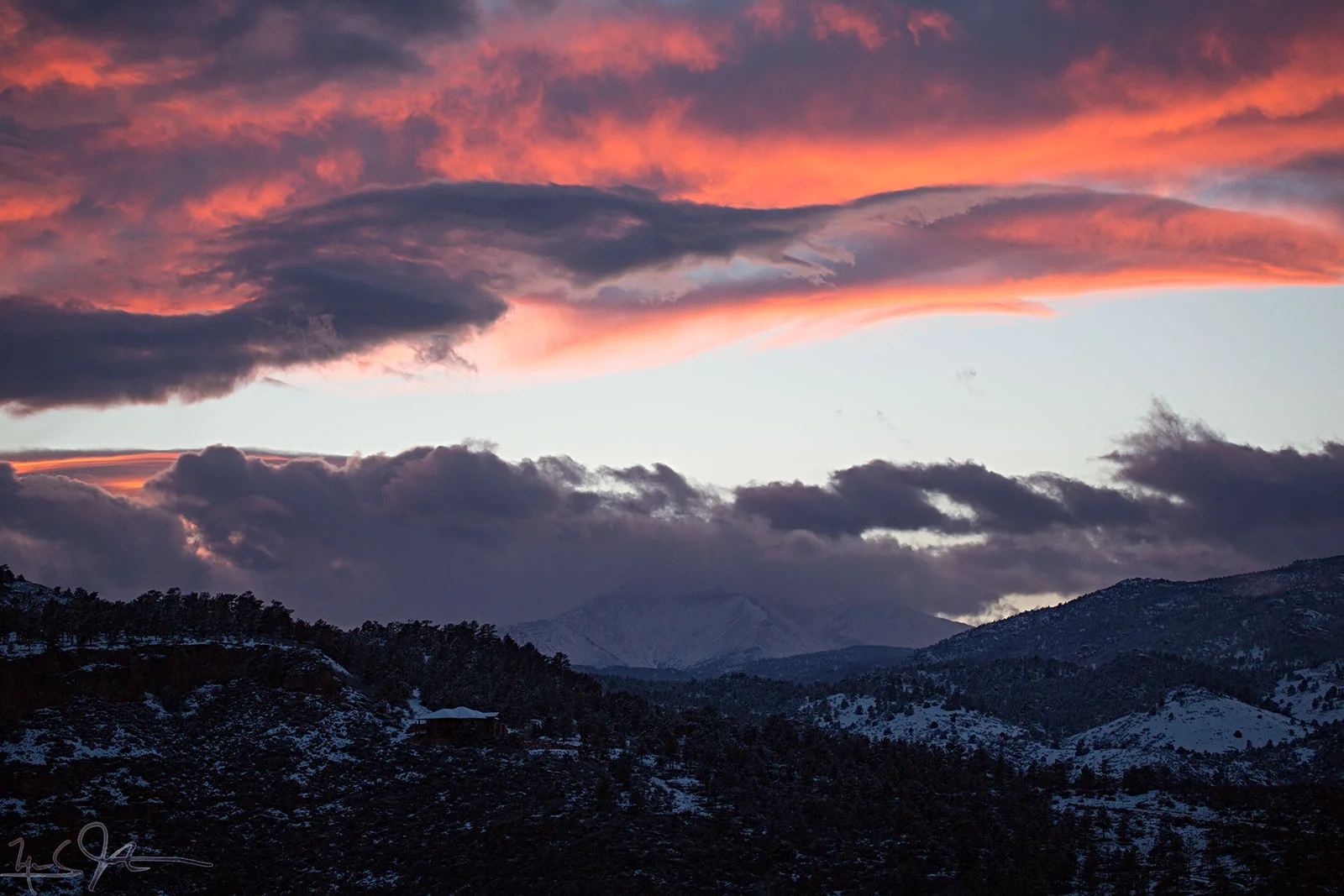
Blue skies appear over Mt. Meeker and Long's Peak.
Sunday morning broke bright and calm, without a cloud anywhere to be seen. A perfect day to climb into the snowy forest.
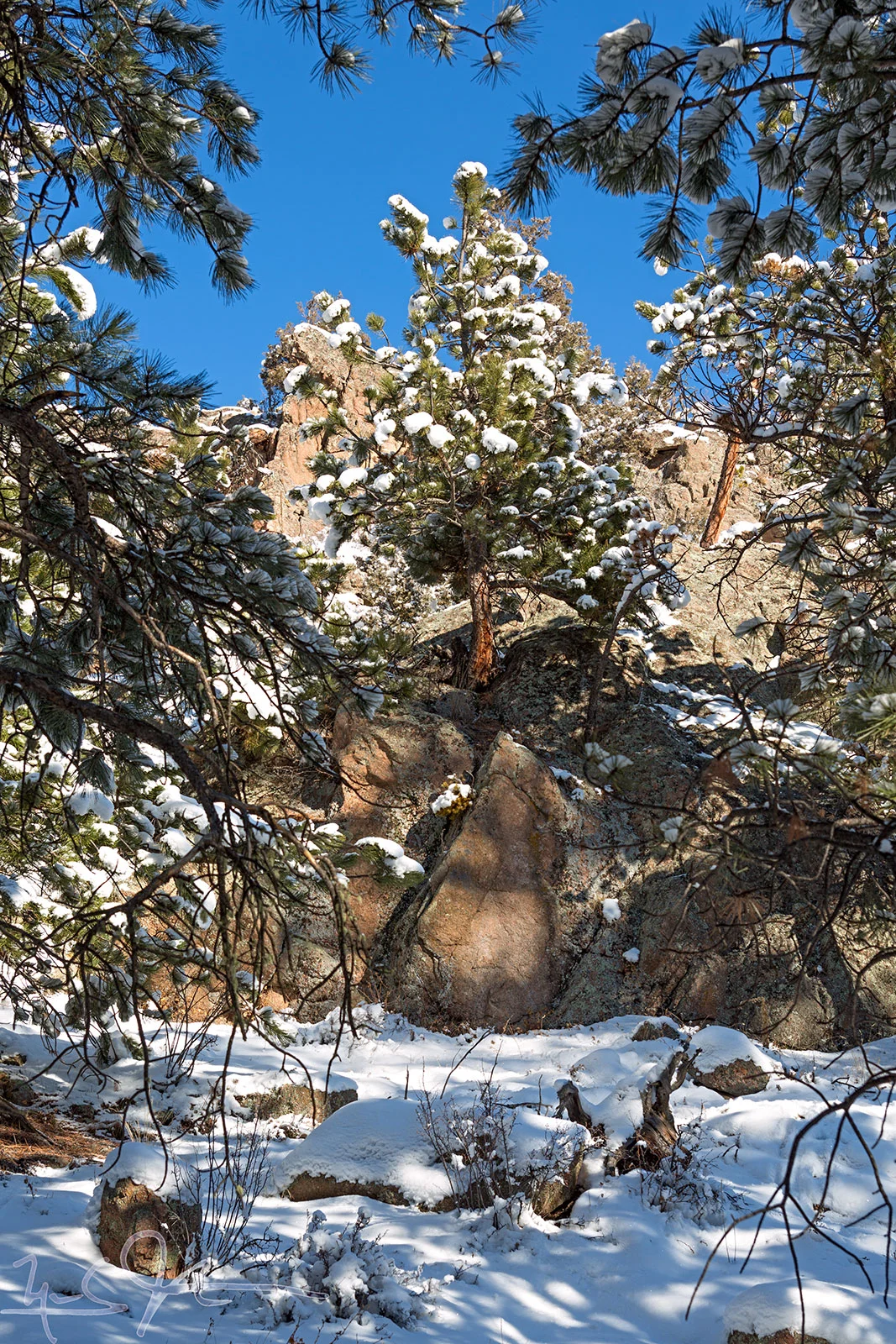


Looking back to the southeast towards the eastern plains of Colorado.


Even the deer were dragging their feet on the way up the hill.

Only my own footsteps to follow back down the hill.

Nine more days until Spring!
Time-lapse sequence with a frame every 6 minutes, taken over a period of 36 hours.
From this:

To this:
Here is a time-lapse sequence including two overhead passes by the International Space Station [ISS]. Both passes begin in the lower-left corner of the frame and end in the upper right.
The first pass occurs between 0:46 and 0:47, and the second pass between 1:05 and 1:07. The station appears as a streak of light in these 4-second exposures.
![The International Space Station [center of green circle] overhead, pass 1, at 7:17 PM on 8 Feb 2013. Green arrow indicates direction of travel. Visible in the frame for about 1 second.](https://images.squarespace-cdn.com/content/v1/5005dbf284aebe9f4d09d4f5/1360528439530-4A7IZKIMWCLH9HTOSYOA/1306-_P2A-1361-ISS.jpg)
The International Space Station [center of green circle] overhead, pass 1, at 7:17 PM on 8 Feb 2013. Green arrow indicates direction of travel. Visible in the frame for about 1 second.
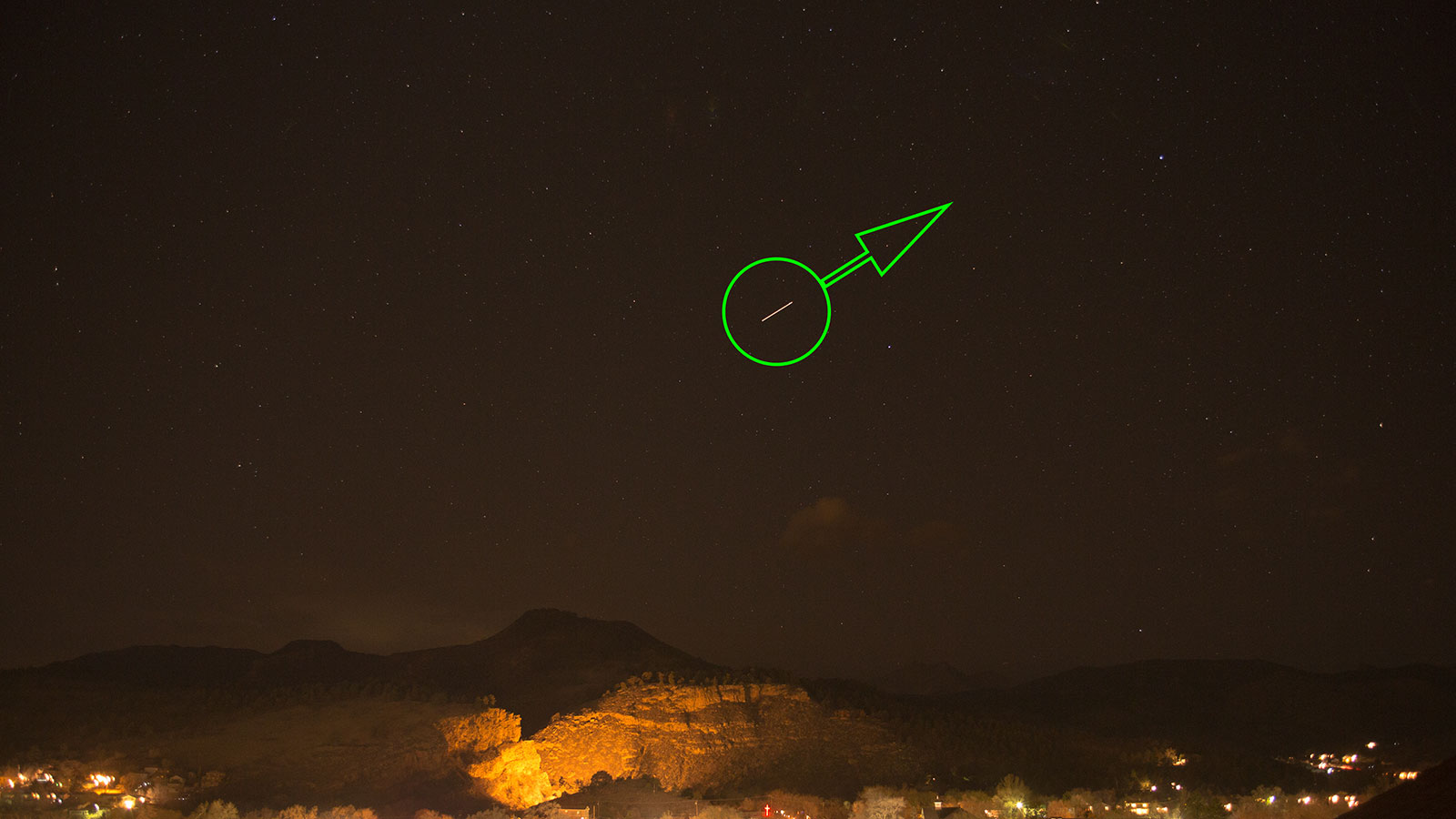
Pass 2, at 8:06 PM on 8 Feb 2013. Green arrow indicates direction of travel. Visible in the frame for about 2 seconds.
The ISS, whose first component, the Zarya module, was launched in 1998, now has approximately a dozen pressurized sections connected and orbiting about 250 miles [402 km] above the surface of the earth [drawing from NASA]:
![Major components of the International Space Station [shown as of May 2011].](https://images.squarespace-cdn.com/content/v1/5005dbf284aebe9f4d09d4f5/1360538074489-4SYK2P39YIYV97LNBG1X/ISS_configuration_2011-05_en-bg.jpg)
Major components of the International Space Station [shown as of May 2011].

