An overcast morning over the Continental Divide suddenly turns spectacular [about 7 seconds into the video] in this time-lapse sequence from the morning of 30 August 2012.
Timber Lake
On the west side of Rocky Mountain National Park. Not far from my recent hike from Milner Pass towards Mount Ida, but about two thousand feet lower in elevation and a little further west. The trail starts at around 9300 feet MSL and climbs to the Lake at 11,040 feet. There isn't much that is really steep - but it just climbs all the way - for 5.1 miles.

On the way to the trailhead, I paused to take a shot of some nice clouds near Lake Irene.

Sunrise near Lake Irene.

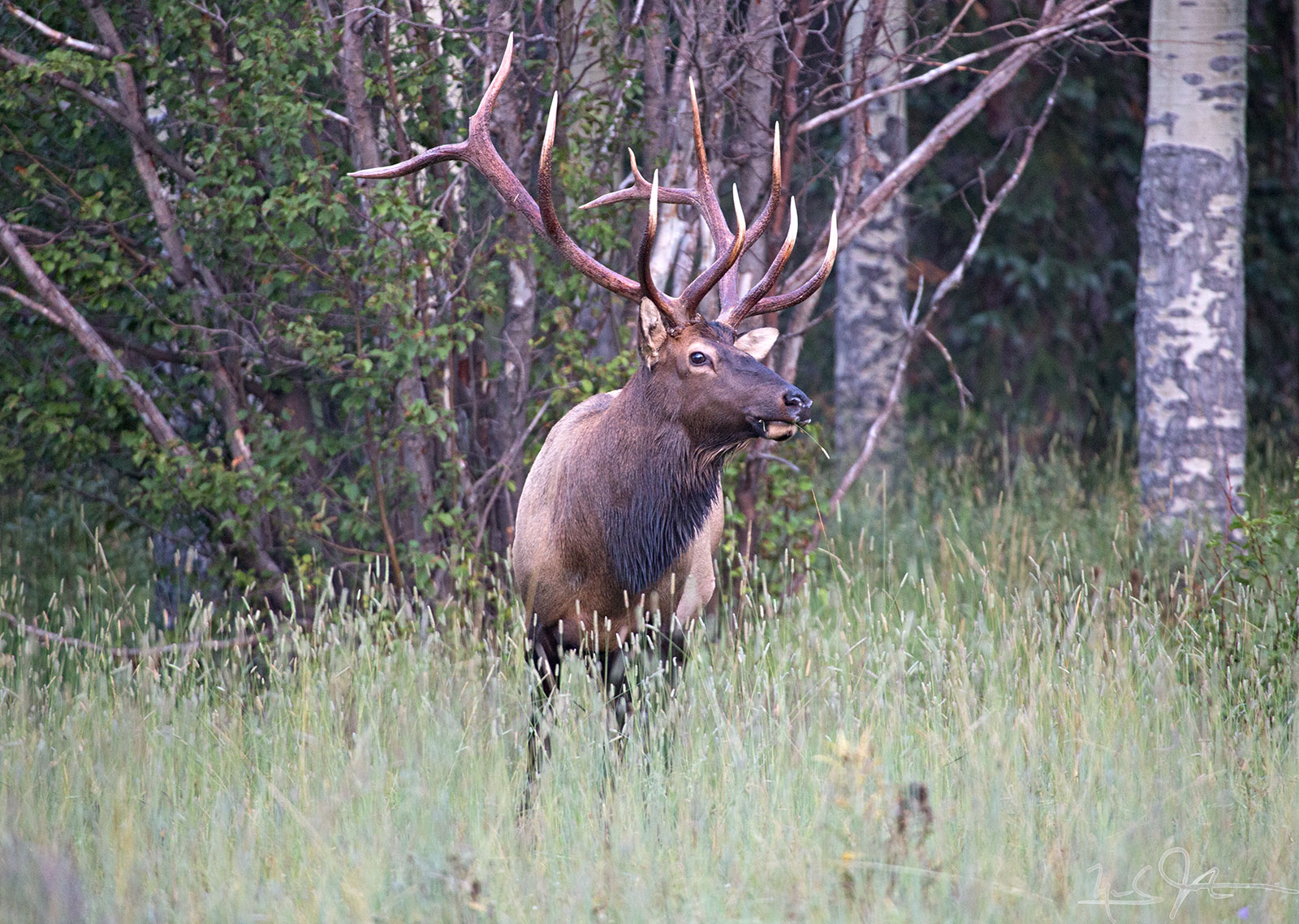
Although it is only August, the elk can already be heard trumpeting early in the morning. Autumn is not far away.

Purple Finch, Carpodacus purpureus.

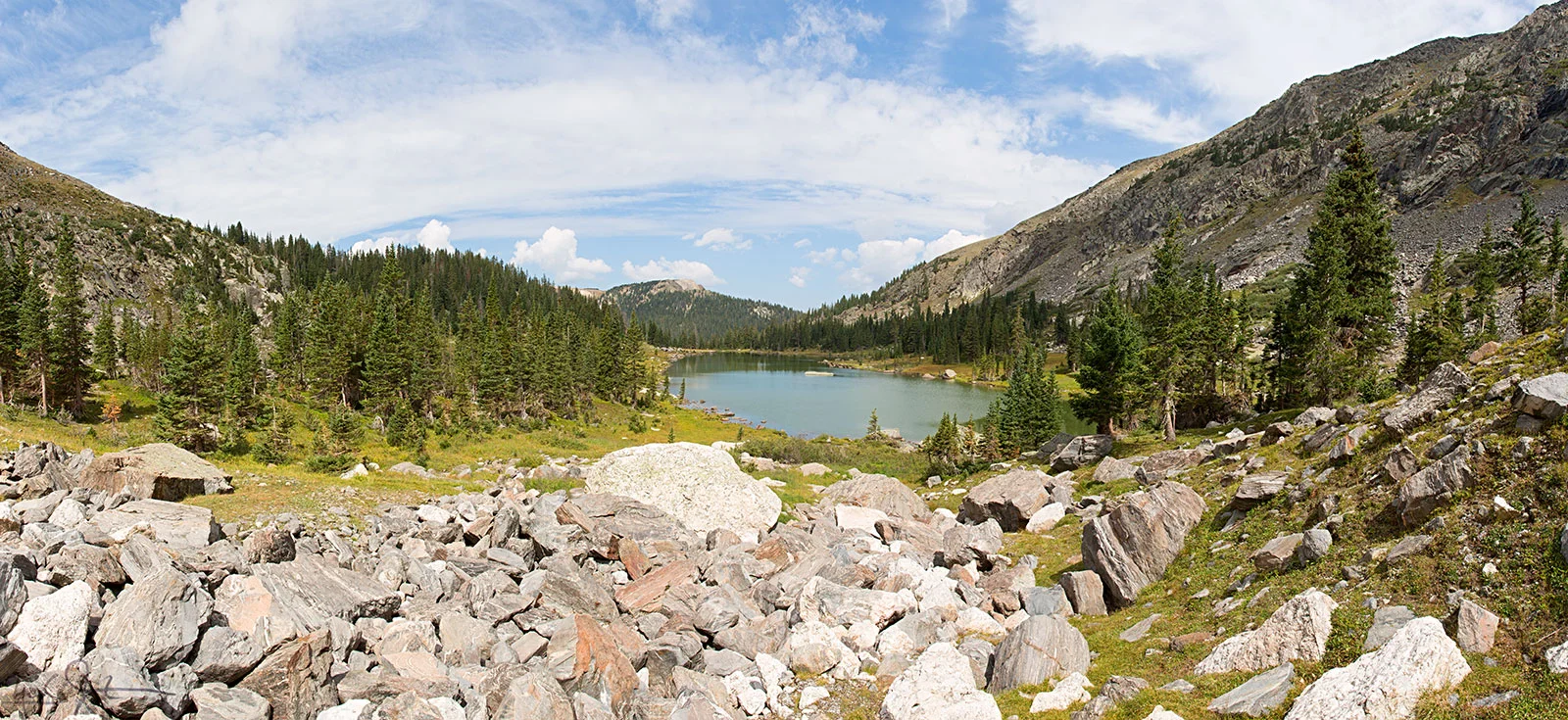
Timber Lake from the rock fall at its head.

This might be the largest mushroom I have ever seen - bigger than my hand!


It was a good day for mushrooms.


Unnamed lake just west of Timber Lake.


Panoramas
I added a section to this site that contains some of the panoramas I have shot, mostly multiple images stitched together, but a few single frames that just have a panoramic view. There's a pretty even mix between urban views - Tokyo, Shanghai, Hong Kong and more - and more natural landscapes - The Rockies, Mt. Fuji, temples, train stations, etc.


Just click on either of the images or captions above to be taken to the full collection.
Milner Pass towards Mount Ida
A hike along the Continental Divide.
This route starts at Milner Pass on the Continental Divide. It climbs from about 10,500 ft. MSL to well above the tree line, towards the summit of Mt. Ida, at 12,280 ft.

Starting point - Poudre Lake at dawn.
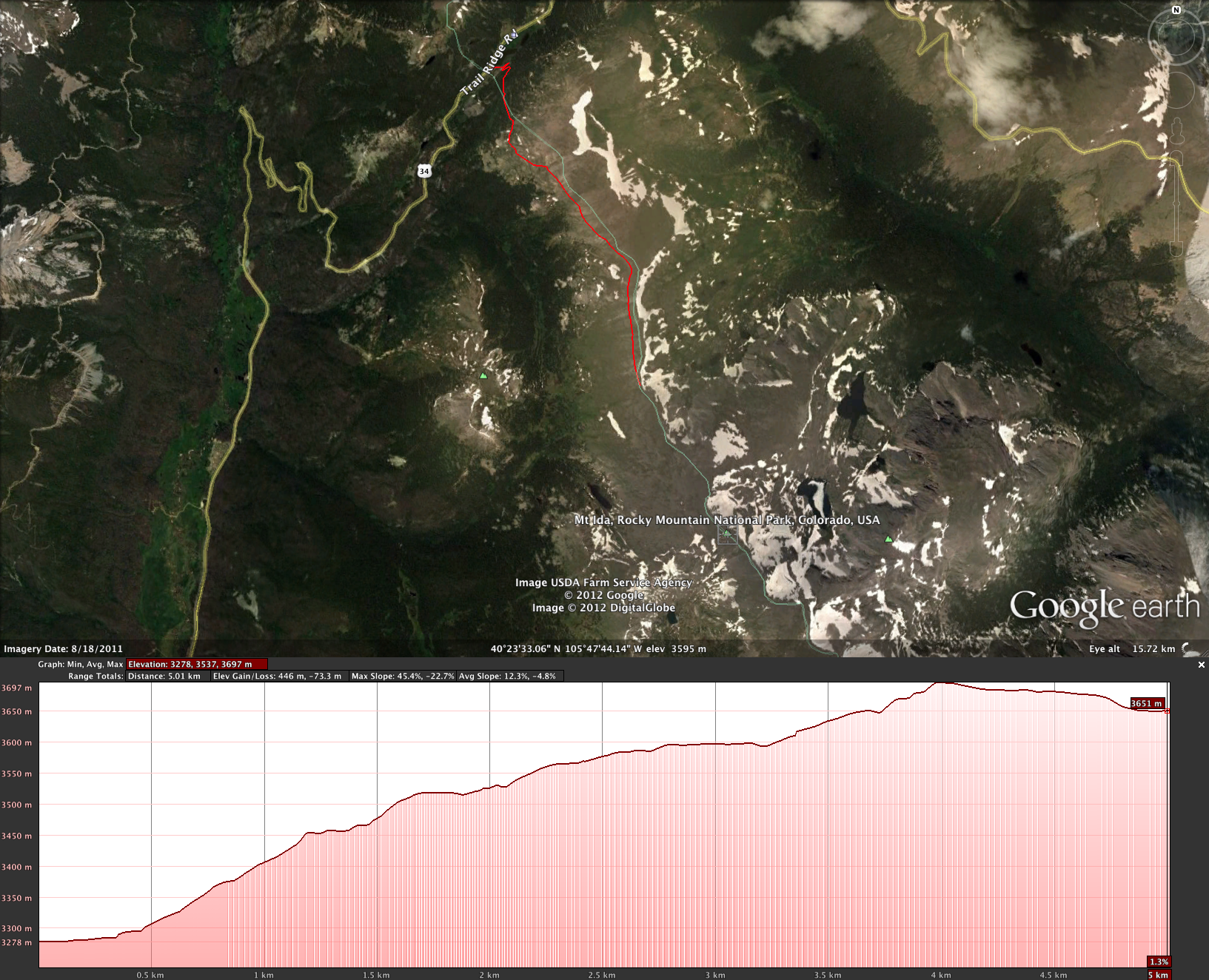
The route.
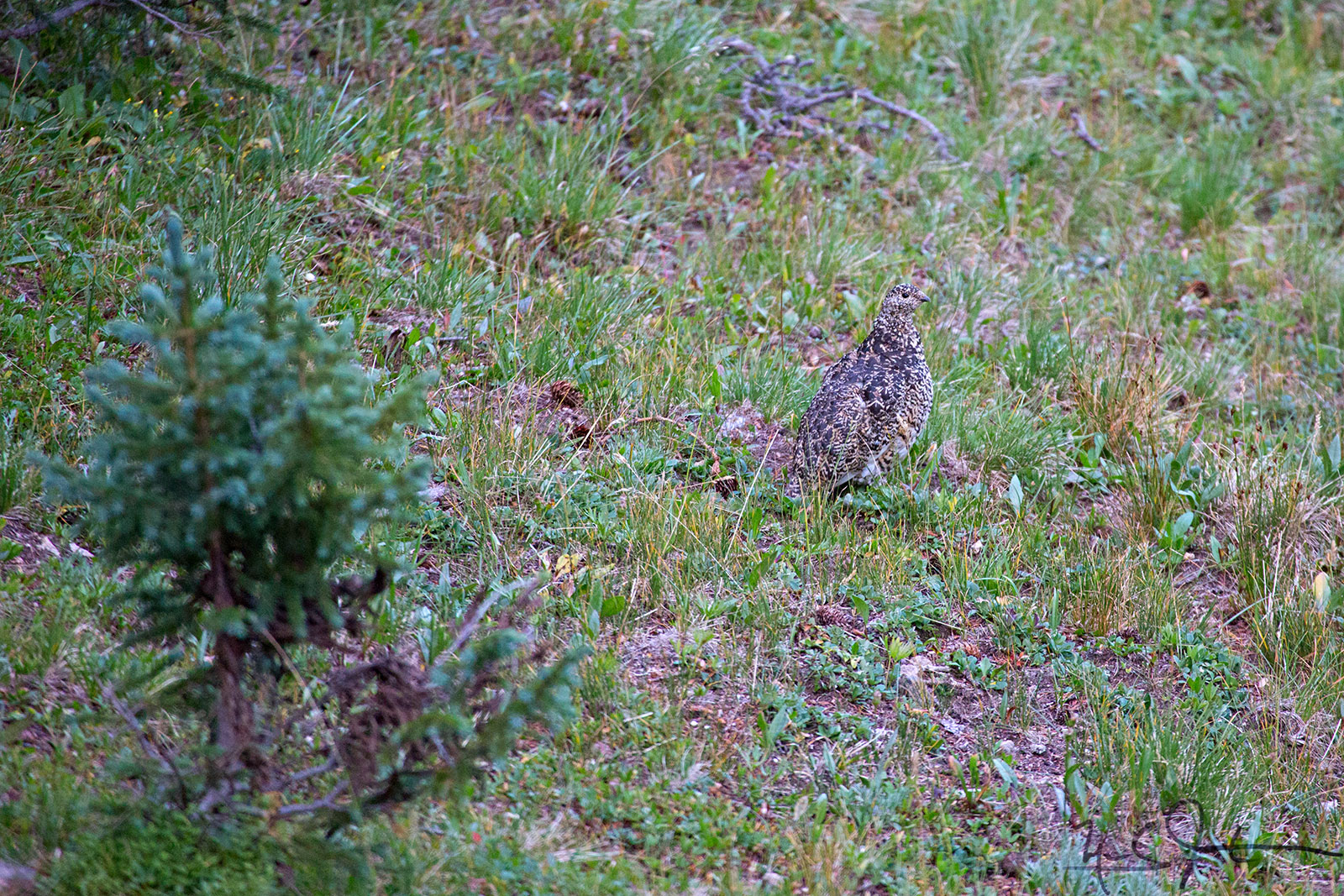
Ptarmigan in summer colors.

Elk graze at dawn.
"Nice rack!"
"Thanks - you, too."
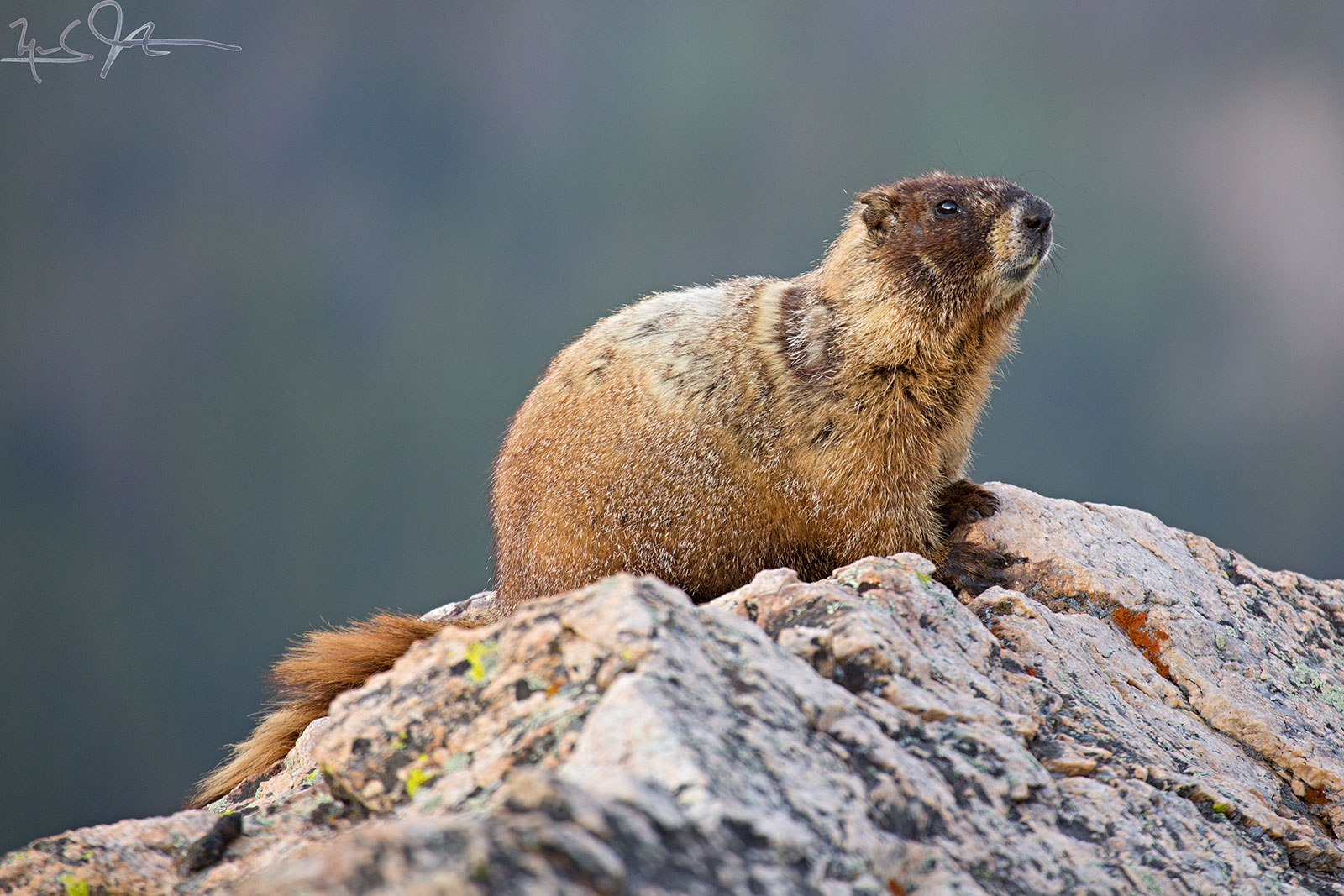
Yellow-Bellied Marmot.

Front porch with a view.
Many paths in addition to the human trail.

Chipmunks at play.


"Small Apollo" butterfly.

Looking from the Continental Divide over a few unnamed lakes towards Forest Canyon, with Trail Ridge and Trail Ridge Road in the distance.

Rocky Mountain panorama.

A rock rabbit, or Pica.


Storing up for the winter?

Mule deer.

A mushroom bursts forth.

Many mushrooms burst forth.


The Martian Triangle
Saturn [at the apex], Spica [lower left], and Mars [lower right] form a nice equilateral triangle in the sky just after sunset.
Spica, 260 light years from Earth, is mis-classified as a "blue giant" - but it is actually a pair of stars so close together that they cannot be resolved through a telescope.
The primary star has more than 10 times the mass of the sun and 7 times its radius. It rotates rapidly, and varies in brightness over about a four-hour period due to expansion and contraction of its surface. The secondary member of the Spica system is smaller than the primary, with about 7 times the mass of the Sun and 3.6 times the Sun's radius. Seen as a single star, Spica is brightest star in the constellation Virgo and the 15th brightest star in the nighttime sky.
![Saturn, the star Spica, and Mars form a nice triangle in the sky left of center, just after sundown. [Might be difficult to see in this image due to image size and monitor resolution.]](https://images.squarespace-cdn.com/content/v1/5005dbf284aebe9f4d09d4f5/1344484368003-B17R4ERHWYJGIF2HF2P4/1232-_P2A-0093.jpg)
Saturn, the star Spica, and Mars form a nice triangle in the sky left of center, just after sundown. [Might be difficult to see in this image due to image size and monitor resolution.]

Close-up of the Martian Triangle.